

At this year’s Hot Docs, there are 14 documentaries that spotlight Asian subjects, or have Asian filmmakers as the creative force behind the films. Come out to support Asian Representation in documentary film!
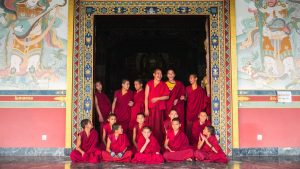
A Little Wisdom
Directed by Yuqi Kang • Canada • Nepali Tibetan
In the lush mountains of Lumbini, Nepal, the birthplace of the Buddha, stands an isolated Buddhist monastery that doubles as an orphanage. Abandoned at a young age, brothers Hopakuli and Chorten are just two of the orphans living in the monastery as novices. In this intimately observed debut feature, director Yuqi Kang spent one year living with the monks. Through her camera, she observes the brothers spending their time climbing trees, telling ghost stories and watching cartoons, while also performing early morning prayers and regimented monastic duties. Kang crafts a fine portrait of two child monks, struggling to balance their austere upbringing with the fantasies of childhood and their longing for family.
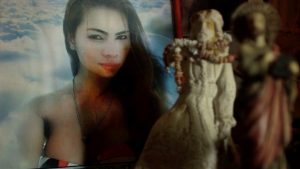
Call Her Ganda
Directed by PJ Raval • USA • Tagalog/English
The violent murder of local trans woman Jennifer Laude, by US Marine Joseph Scott Pemberton during his “liberty leave” in Olongapo City, ignites a media firestorm, a high-profile court case and street protests. Three women intimately invested in the case combine forces to demand justice: activist attorney Virgie Suarez, transgender investigative journalist Meredith Talusan and Jennifer’s mother, Julita. Taking on well-established legal precedents that ensure US military presence and impunity in the Philippines and perpetuate transphobia, the women aim to end the pattern of American predators evading criminal consequences. In death, Jennifer becomes a flashpoint for national discussion about gender-based violence, transgender discrimination and the Visiting Forces Agreement between the Philippines and the United States, bringing disparate issues and players together under a common cause. Call Her Ganda forges a profoundly humanistic geopolitical investigative exposé from personal tragedy and insists that justice and systemic change can’t come soon enough.
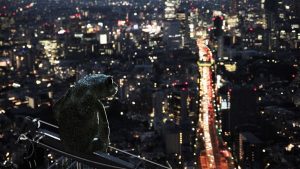
Dreaming Murakami
Directed by Nitesh Anjaan • Denmark • Danish/English/Japanese/Norwegian
Discovering a writer can change a person’s life. More than 20 years ago, Mette Holm read her first novel by Japanese author Haruki Murakami, who had yet to grow into one of the biggest names in contemporary literature—and it turned her world upside down. She has since become his official Danish translator, spending thousands of hours transcribing his bizarre and unique universe into her native language. As Holm travels to Japan, she introduces us to the mysteries of her craft, proving that her commitment to the novelist’s vision has turned into a way of life. While Murakami himself always remains hidden—a conspicuous absence contributing to the film’s delicate magic—the surreal and spellbinding atmosphere of his books slowly pervades reality, so we’re not surprised when a giant talking frog appears in this dreamy love letter to the art of translation.
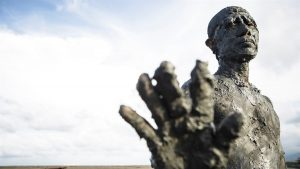
Grit
Directed by Cynthia Wade & Sasha Friedlander • USA • Indonesian
While multinational Lapindo was drilling for natural gas in Indonesia’s East Java in 2006, they hit an underground mud volcano, unleashing a tsunami of hot mud that covered an area twice the size of Central Park. Roads, factories and homes were destroyed, 20 lives were lost and nearly 40,000 people displaced. In a film that inspires one to fight against injustice, we see that over a decade later the mud still flows and neither Lapindo nor the government have made the reparations that they promised. Dian was six years old at the time and her mother Harwati has struggled to raise her. The mother/daughter duo, along with many neighbours, fight against the corporate powers accused of one of the largest environmental disasters in recent history. The film bears witness to Dian’s transformation from a young girl to a politically active teenager determined to defend the powerless.

Letter from Masanjia
Directed by Leon Lee • Canada • English/Mandarin
When a woman in Oregon opens a box of Halloween decorations and finds a distressing letter written by a political prisoner from inside a Chinese labour camp, her discovery makes waves across major news outlets worldwide. Meanwhile, the author of the letter, Sun Yi, breaks through internet firewalls to learn about the attention his letter has received and joins forces with an underground network of journalists and Chinese dissidents to reveal his entire story. From Peabody Award–winning director Leon Lee, Letter From Masanjia takes us deep into the horrific realities of China’s labour camps through the eyes of Sun Yi, who’s determined to expose these unthinkable human rights violations. Despite being hotly pursued by local authorities, he stops at nothing to find justice, ultimately leading to large-scale reform of China’s labour camp system.
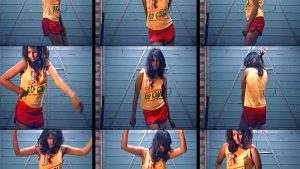
Matangi / Maya / M.I.A.
Directed by Steve Loveridge • USA • English/Tamil
Mathangi Arulpragasam started out with a yearning to make films. As a teenaged immigrant in London, she was fascinated by her family history and the political turmoil of her homeland of Sri Lanka. As the years went on, her artistic expressions would shape her into the genre-bending music star M.I.A. Her unique sound, bold style and controversial, outspoken activism made her into a worldwide sensation. Admirers and critics latched on to lyrics, videos—and a single finger that caused a multi-million-dollar lawsuit. Through it all, she maintained her rebellious spirit, much to the delight of her fans and the scorn of her detractors. Assembling countless hours of M.I.A.’s own footage alongside music videos, interviews and concert performances, her lifelong friend Steve Loveridge has created an exhilarating mash-up that showcases the many forms of a polarizing and fascinating pop culture figure.
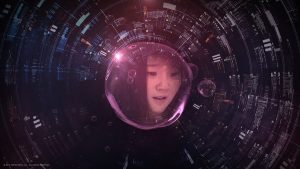
People’s Republic of Desire
Directed by Hao Wu • USA • Chinese
co-presented with Reel Asian
Enter the virtual world of YY, a popular live-streaming social network where millions of China’s poor and isolated “diaosi,” feeling left out of the country’s vast economic growth, seek fame and fortune. YY offers unknown entertainers the chance to launch lucrative careers where rich patrons shower them with cash, to the delight of awestruck diaosi willing to spend all they have to get noticed. Popular performers like karaoke singer Shen Man and diaosi-turned-comedian Big Li can make up to hundreds of thousands per month after splitting their earnings with YY. But first they must rally their fans and patrons for votes to win the annual Idol-esque competition—a big online reward with harsh offline consequences. Part coming-of-age story, part subcultural exposé, People’s Republic of Desire is a vérité tour through a world where expensive dreams are built and broken, but YY always wins.
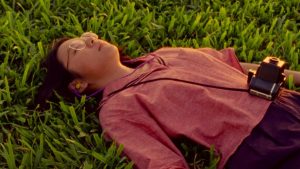
Shirkers
Directed by Sandi Tan • USA/Singapore • English
co-presented with Reel Asian
An inspired labor of love for zine-making teens Sandi Tan, Jasmine Ng and Sophie Siddique, Shirkers was a Singapore-made 1992 cult classic—or it would have been, had the 16mm footage not been stolen by their enigmatic American collaborator Georges Cardona, who disappeared. More than two decades later, Tan, now a novelist in L.A., returns to the country of her youth and to the memories of a man who both enabled and thwarted her dreams. Magically, too, she returns to the film itself, revived in a way she never could have imagined.
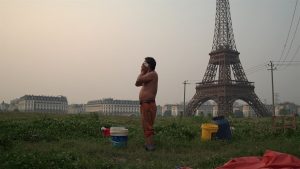
The Real Thing
Directed by Benoît Felici • France • Chinese/English/Hindi/French
Las Vegas isn’t the only city adorned with architectural replicas. Today, you can admire the London Bridge near Shanghai, visit St. Peter’s Basilica in Côte d’Ivoire, or take selfies with one of China’s Eiffel Towers. These large-scale copycat monuments can seem like mirages conceived by clever real estate investors, but what do they say about imaginary geographies, modern tourism and globalized urban planning? Do they herald a world where travellers won’t cross borders, or are they proof of heightened cultural exchange and new transnational identities? A captivating and poetic meditation, The Real Thing elegantly journeys from one corner of the globe to the next—capturing a strange postcard here, an unexpected slice of life there—and collects philosophical musings from the people who design and inhabit those places. It creates an intriguing mirror game that plays with the viewer’s perception and reflects an unexpected image of the world.
The Return
Directed by Malene Choi Jensen • Denmark • Danish/English/Korean
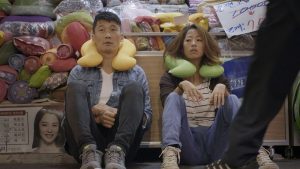
Two Danish-Korean adoptees return to Seoul in search of their birth mothers. Staying at the Koroot guesthouse, they meet and exchange confidences with other transnational adoptees from around the world who struggle with similar experiences: grief, frustration and a longing for something without knowing exactly what. The Return uses fictional elements to construct and deconstruct feelings of being caught between cultures and identities. Performance is used to protect the adoptees, allowing them to speak from the heart without fear of criticism or insult. Scripted scenes expand their personal stories to include more than just the facts, since records are routinely lost, falsified or nonexistent. Defining a person’s sense of self and belonging doesn’t fit neatly into reality and requires dreaming, questing and characterization. Where you come from might be tied to time and space, but who you are is more related to feeling, like a foggy vanishing point that seems fixed, but isn’t.
The Silk and the Frame
Directed by Jordan Schiele • China/USA • Mandarin/Sign Language/English
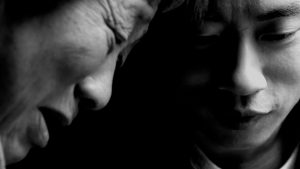
Yao Shuo, a closeted gay man who financially supports his entire family, struggles to fulfill his father’s dying wish to marry and continue the family’s bloodline. Yao travels from Beijing to his tiny rural hometown for Chinese New Year, where he’s reunited with his mother, who became deaf after a medical accident, and his father, who requires a wheelchair and no longer speaks. Shot in stark black and white, Yao eloquently compares his situation to that of a moth—drawn to the flame that will both harm him and make him happy. He longs to communicate his true wishes but can’t if he wants his parents’ love and approval. A confessional portrait that clearly displays the strained family dynamic, The Silk and the Flame captures the impossible conflict and pain that come from trying to please a family and culture that don’t accept you as you are.
To Kill Alice
Directed by Sangkyu Kim • South Korea • Korean
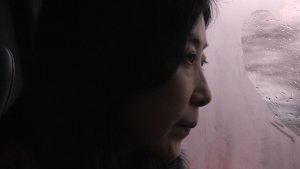
Eunmi, a South Korean woman who grew up with an intense anti-communist education, lives a placid life in America. Her life changes, however, after a vacation to North Korea inspires her to write a book about her tourist experiences and hopes for unification. She travels to South Korea for a promotional book tour, where she’s suddenly accused of having a communist agenda and spreading propaganda. A media circus, public outrage and threats of violence erupt all around her. A dramatic story about a civilian’s right to free speech versus an entire country’s national security law, To Kill Alice documents Eunmi’s turbulent promotional tour as her intended message gets radically reinterpreted. But are Eunmi’s book and public speeches delivered with good intentions? Or are they a calculated political ploy to sway South Koreans’ collective memory and insult their complicated history? Director Sangkyu Kim captures the unbelievable drama as it unfolds, as hype twists into hypocrisy and debate turns into hate.
Ubiquity
Directed by Bregtje van der Haak • Netherlands/Belgium • Dutch/Swedish/English/Japanese
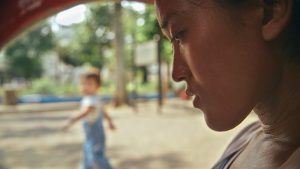
Wi-Fi routers, smartphones and cell towers are everywhere. With plans to link every digital network on the planet by 2020, connectivity will soon become ubiquitous. People will no longer commute, they’ll communicate, using technology that ties us all together, anywhere and everywhere. For some people, the expanding digital network is a tightening noose of health risks associated with electromagnetic radiation. Three “electro sensitives” who endure electro-hypersensitivity in Japan, Sweden and the Netherlands share their experiences evading connectivity, running out of safe spaces and making radical life choices that cause conflict with family and friends. Are these “electro sensitives” outliers or canaries in the coal mine of our modern world, warning humanity that the wireless technologies intended to promote ease are actually causing disease? What are the long-term consequences of constant computer and cell phone use? Ubiquity is a pressing reminder that sometimes going forward requires going back and reflecting on what we have invented.
Yellow is Forbidden
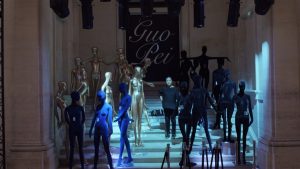
Directed by Pietra Brettkelly • New Zealand • Mandarin/French/English
Givenchy, Chanel, Christian Dior, Jean Paul Gaultier: these designers all belong to an illustrious club that’s highly exclusive, predominantly male and largely European—that of “haute couture,” a designation that may not be used except by a few select firms meeting well-defined standards. For China’s fashion darling Guo Pei, it’s time to add her name to that list. Born into a world of uniforms and official arts, this industrial school student gained international fame with her extravagant, heavily embroidered creations, which weigh up to 50 kg and take up to 50,000 hours to complete. Her astonishing, otherworldly pieces are handmade by a team of 500 workers, trained in age-old traditions forgotten under decades of Communist rule. As this daughter of the Cultural Revolution prepares for Paris Haute Couture Fashion Week—ironically using Christian and royal iconography in her designs—we witness the ultimate celebration of an artist that simply defies categorization.