
Many of us idolize Ang Lee as one of the “movie gods” still living. In many audience members’ eyes, this godlike moment arrived when Lee made Crouching Tiger, Hidden Dragon, the Oscar winning martial arts masterpiece. But like any other masterpieces, Crouching Tiger, Hidden Dragon is not just a product of one person’s pure genius.
Last summer, I had the honour of attending a master class taught by the formidable Peter Pau at the First International Film Festival in China. Peter Pau was the mastermind behind the cinematography in Crouching Tiger, Hidden Dragon, and for his work in this film, he became the second Chinese cinematographer winning an Oscar. Before Pau entered the room, all the students silently awaited for the moment of truth — who is this guy that enabled Zhang Ziyi and Chow Yun Fat to fly across the bamboo forest, defying the laws of gravity?
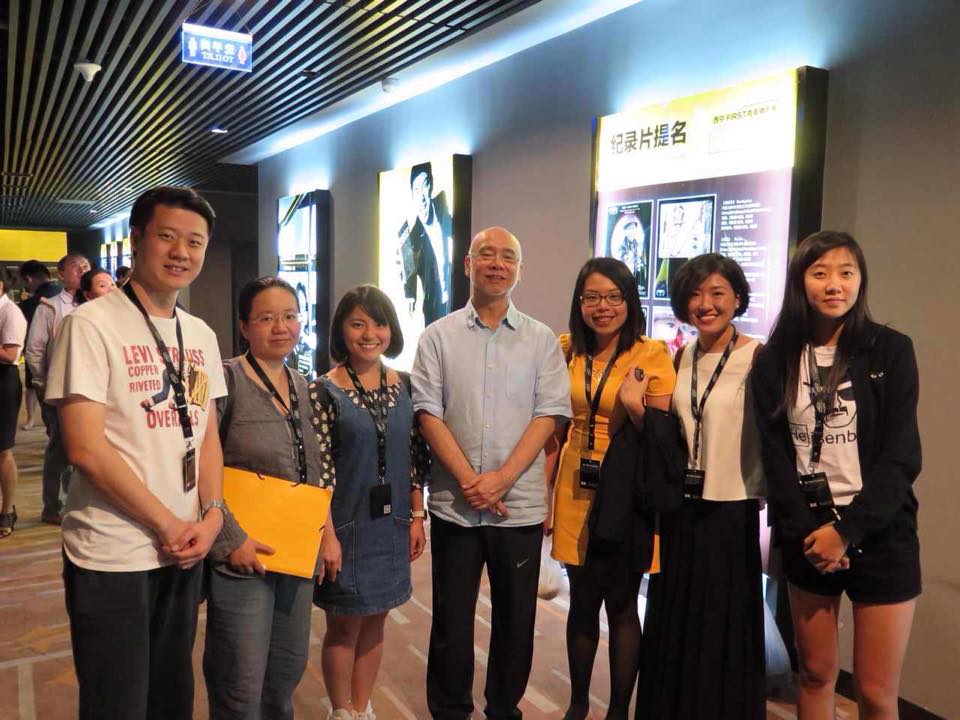
Group photo with Peter Pau (centre) after his master class.
Peter Pau was everything and nothing of what I anticipated. Born in Canton and raised in Hong Kong, Pau actually spoke fluent mandarin. He was lively and eager on stage, showing clip after clip from his body of work and dissecting frame by frame to extrapolate all the techniques he used. What impressed me the most was his down-to-earth, meticulous dedication to his work. We were told that Pau homemade the DCP that contained all the clips he was showing. As soon as he arrived at the festival, he headed straight to the theatre to test the DCP.
After analyzing films from his early career working for Hong Kong commercial cinema in the late 80s and early 90s, Pau unmistakably touched upon the case study of Crouching Tiger, Hidden Dragon. Pau shared that when Ang Lee first came to him, Lee was scratching his head. Before this film, Lee exclusively worked in the realm of drama, and so he needed Pau to take the lead in designing cinematography for all the action sequences.
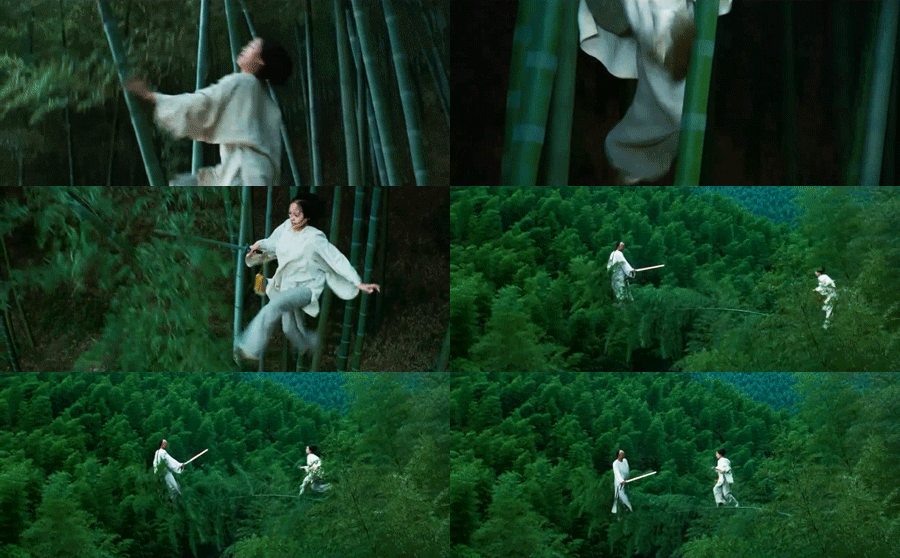
Pau understood perfectly that at the centre of Crouching Tiger, Hidden Dragon are its complex characters, and hence every camera setup was character driven. In the famous bamboo forest scene that signifies a pivotal moment in Li Mubai (starring Chow Yun Fat) and Yu Jiao Long’s (starring Zhang Ziyi) relationship, Pau and Lee raised the camera to an extraordinary height. From wide angle shots, the camera “flies” with the characters, showcasing the fluidity in their movement from 360 degrees. At the same time, Pau and Lee inserted close-ups of both characters, suggesting that there is a hint of platonic romance lingering. “You don’t see this in other films’ fight scenes,” Pau proudly stated, “It’s no accident that whenever the camera is up close, it is at human chest height rather than at eyeline level. We want to let audience feel the intimacy and intensity in the fight sequences.”
This unique cinematography allows for both an ephemeral touch in the martial arts movement and the gentle access to the characters’ inner world without the need of spoken lines. Unlike most martial arts movies of its time, or as commonly known in Chinese, wu xia (武俠) films, Crouching Tiger, Hidden Dragon emphasizes not merely on the “wu”– the chase, the fight and the hustle and the bustle. More importantly, it looks deeply into what it means to be “xia,” the social and psychological being of an noble martial arts practitioner. It’s not about how the “tiger” and the “dragon” move. It’s about how they think and feel as they move. Such an exceptional feat is the result of collaboration among many great minds who brought their expertise to the film, including director Ang Lee and cinematographer Peter Pau.
Reel Asian is playing Crouching Tiger, Hidden Dragon on July 27 at 8:45 pm @ Bell Lighbox as part of its Retro Summer Series. Buy tickets HERE.
Blog post by: Betty Xie, Development and International Programming Associate