

Andrew Ahn, director of Spa Night, which premeired at this year’s Sundance Film Festival reminded us – Asian American cinema exists. I’d echo his statement. There’s a long list of great Asian American and Asian Canadian films (let’s call it all Asian American cinema for short, sorry Canada), especially in the last 10 years*. If you were teaching a course on Asian American cinema, you could easily fill a syllabus with a canon of films. Better Luck Tomorrow would probably be at the top of the list of films both for its quality and it’s cultural importance.
*For a great list of top Asian American and Asian Canadian films of the past ten years, check out the great work of Brian Hu and Ada Tseng from Asia Pacific Arts.
Even up until the late 1990s, Asian American cinema was largely documentaries and short narrative and experimental films. Great and award winning feature documentaries like Curtis Choy’s “The Fall Of The I Hotel”, Christine Choy and Renee Tajima-Pena’s “Who Killed Vincent Chin?” and Spencer Nakasako’s “AKA Don Bonus” defined Asian American cinema. Wayne Wang’s first dramatic feature “Chan Is Missing” felt like an outlier.
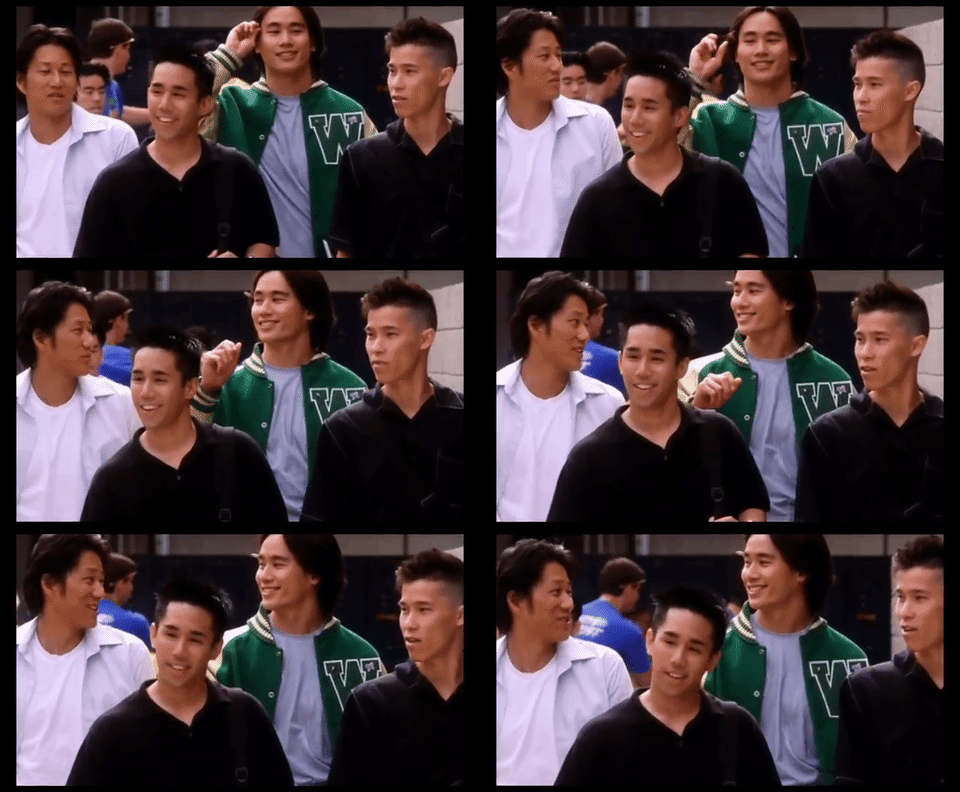
Better Luck Tomorrow felt like a tipping point for Asian American cinema, a culmination of what was started five years earlier by Justin Lin’s first feature film. The watershed moment for a boom in new Asian American dramatic features was 1997 with “Shopping For Fangs” from Justin Lin and Quentin Lee (from Vancouver), Chris Chan Lee’s “Yellow”, Rea Tajiri’s “Strawberry Fields” (written by Toronto writer Kerri Sakamoto), and “Sunsets” by Michael Idemoto and Eric Nakamura. It was this grouping of films premiering at the San Francisco Asian American Film Festival that helped inspire the creation of the Toronto Reel Asian International Film Festival that same year.
I attended the film festival in San Francisco that year as I had my first short film showing. It was eye opening because there was a buzz about these dramatic feature films. Back then, to see four come out in the same year was unheard of. The festival often had a lot of docs and short films, and dramatic feature films were usually from Asia. I remember watching “Strawberry Fields”, I was 17 and didn’t understand it but it was still exciting and new. Most of all, it showed us that Asian American features were possible and that excitement about possibilities laid the groundwork for Better Luck Tomorrow. It wasn’t so much that filmmakers now believed it was possible, it was that we the Asian American audience believed it was possible for an Asian American cinema to be in dramatic feature film form.

When Better Luck Tomorrow was bought by MTV films (which was part of Paramount) it was huge news. It was the game changer that we all were hoping for. The “crossover” film to mainstream America that would change it all. In Asian America, it was cause for celebration (even though most of us hadn’t seen it yet because it had been on the festival circuit!) – this was the first Asian American indie film to get a major distribution deal. It was fresh, young, and showed Asian Americans that we could relate to, Asian Americans who were very American and weren’t burdened by their Asian identity. Their identity was a part of who they were but not the only thing about them. It was sly in that it played on the idea that being the “model minority” was the perfect cover for pulling off criminal acts. It was also told with a style that the staid Joy Luck Club didn’t offer. The Joy Luck Club was your mom’s friends. Better Luck Tomorrow was you and your friends (at least your straight Asian male ones). The Joy Luck Club was a known entity that we knew the mainstream already liked because it fulfilled expectations of Asian Americans, and we were suspicious of that. This was a chance for a wider public to finally see nuanced Asian Americans. Better Luck Tomorrow’s exposure felt like a moment, a game changer. We were movin’ on up.
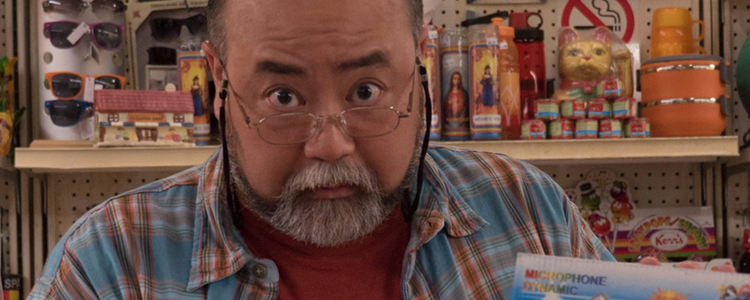
CBC’s KIM CONVENIENCE
Was it a game changer? Did it change anything? It was uncharted waters and its distribution deal, whatever its successes couldn’t have fulfilled our wild expectations. It’s just that if/when you get called up to the big leagues, sometimes you think it’ll be your only shot. We always want things to happen faster than they can/will/want to. But look at things now and it feels like better times for Asian Americans in mainstream media. Justin Lin has gone on to become a successful and visible Hollywood director making films that don’t suck for two major moneymaking franchises (that’s not easy, see Zach Snyder). That’s great. John Cho is still kicking around. It’s also great we have shows like Fresh Off The Boat, Dr. Ken, and Master Of None. And even Kim’s Convenience and Second Jen are TV shows slated for Fall release in Canada. Did Better Luck Tomorrow have anything to do with that? I’m not sure. But I am sure that the constant creative vigilance of Asian American and Asian Canadian filmmakers and creatives has contributed to these relatively good times. And it’s these critically minded creative people that will ensure that it’s not just representation but well told stories from an Asian American perspective.
BETTER LUCK TOMORROW returns to theatres for one night at the TIFF Bell Lightbox on Thursday August 25th, 8:45PM, as part of Reel Asians’ “Retro Summer” series. Tickets available below.

Written by Aram Collier, Director of Programming & Education.