
Reel Asian is proud to be the official Community Partner of TIFF Cinematheque’s Hou Hsiao-hsien retrospective!
Taking place from January 29 – March 1, Good Men, Good Women: The Films of Hou Hsiao Hsien is a complete retrospective devoted to the great Taiwanese master that offers an invaluable opportunity to discover a body of work revered for its humanism, complexity and contemplative beauty. More information.
Additionally there will be two free film screenings of some of Hou’s most well-known works: City of Sadness and The Puppetmaster. Click on the links to find out how to reserve your free tickets.
Reel Asian will co-present three films at the retrospective: A Time to Live and a Time to Die is Hou’s first masterpiece; an eloquent biographical work about a Mainland family settling in Taiwan in 1947. Three Times, an exquisite trilogy of love stories set in three different time periods starring Shu Qi and Chang Chen. The Green, Green Grass of Home is the last of Hou’s commercial romantic comedies, this CinemaScope musical is an important transitional work that portends the New Taiwanese Cinema in its use of location shooting and improvisation.
Read more below!
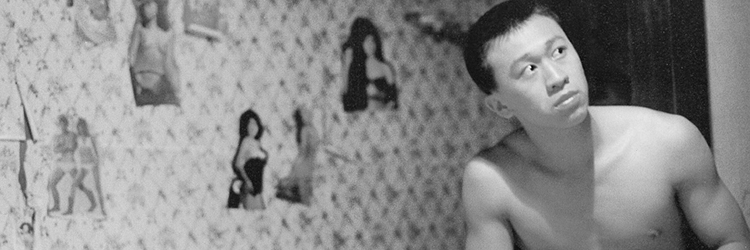
A TIME TO LIVE AND A TIME TO DIE (童年往事)
Dir. Hou Hsiao-hsien
Saturday January 31, 2015 @ 3:30pm
TIFF Bell Lightbox (350 King St. W)
SYNOPSIS: An eloquent autobiographical work filmed in the rural village where Hou grew up, A Time to Live and a Time to Die is “Hou’s first genuine masterpiece” (Phillip Lopate) and inspired both Apichatpong Weerasethakul and Hirokazu Kore-eda to become filmmakers. Spanning the years 1947 to 1965, Time pays homage to Hou’s father, who moved his family from the Mainland to Taiwan during the Chinese civil war and spent the rest of his short life longing for the home he could never return to. (As in much Hou, the intimate becomes epic: the film’s oblique political references make it a study in miniature of Taiwan’s tumultuous twentieth-century history.) Adhering to the everyday, Hou accrues delicate observations and moments of loss and regret (the mother’s admission of her disappointment in life reminds one of Ozu’s Tokyo Story); the final sequences, culminating in a frontal frieze of four apprehensive boys, transform childhood remembrance into elegy. “No film I have seen this year has impressed me more than this miraculous history…. It is a spectacular triumph without anything of the ‘spectacular’ about it…. This is filmmaking on the very highest level” (Derek Malcolm, The Guardian). More information
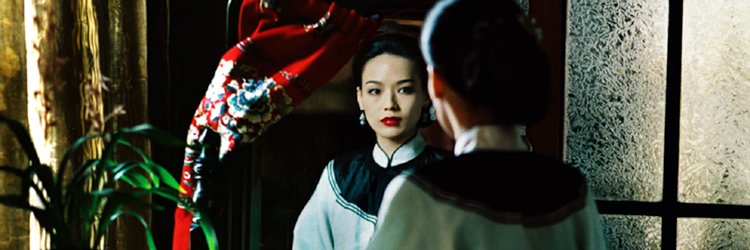
THREE TIMES (最好的時光)
Dir. Hou Hsiao-hsien
Tuesday February 10, 2015 @ 6:30pm
TIFF Bell Lightbox (350 King St. W)
SYNOPSIS: “A masterpiece … this is why cinema exists” (A. O. Scott, The New York Times). Hou has referred to this exquisite compendium of three love stories (each featuring a couple played by Chang Chen and Shu Qi) as being about the “bliss” that comes from recollecting a wonderful time, lost and retrievable only through memory — no surprise for this most Proustian of filmmakers. Set in 1966, the radiant, summery “A Time for Love” is about a lonely soldier who pursues a pool-hall hostess across the country, from town to town and billiard hall to billiard hall. “A Time for Freedom” takes place in the lacquered world of a Dadaocheng brothel in 1911, where a courtesan and a patron long for different kinds of freedom: he wants to liberate Taiwan from Japanese rule, while she yearns for the same autonomy he has accorded a young concubine by paying off her indenture. “A Time for Youth” is set in present-day Taipei, where an epileptic singer is burnt out, losing her sight, and bedevilled by the jealous lesbian lover whom she ignores to spend more time with her photographer boyfriend. Magisterial in its range of method, tone, style and setting, Three Times is both a summa of Hou’s career and a miniaturist portrait of Taiwan’s history over the last century. More information
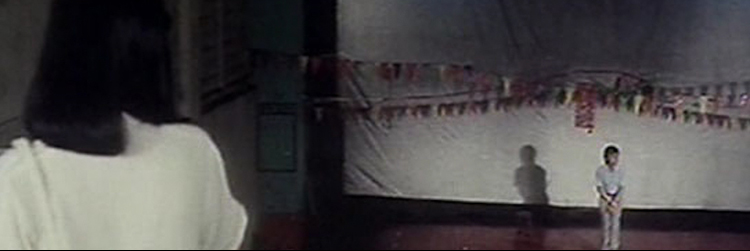
THE GREEN, GREEN GRASS OF HOME (在那河畔青草青)
Dir. Hou Hsiao-hsien
Friday February 27, 2015 @ 6:30pm
TIFF Bell Lightbox (350 King St. W)
SYNOPSIS: A rare early Hou and an important transitional work that portends the New Taiwanese Cinema in its use of location shooting and improvisation, The Green, Green Grass of Home takes its title from a Tom Jones song, but its atmosphere is entirely homegrown. The last of Hou’s so-called Kenny Bee trilogy and the most subtle of the three, this romantic CinemaScope musical tells the tale of a substitute teacher from Taipei (Bee) who falls for a colleague in a village school, much to the consternation of his girlfriend back home. She arrives from the city determined to drag him away, scandalizing the rural community with her haughty ways. Hou’s charming study of small-town mores “compares favorably with Ozu’s lyrical comedies of the 1930s” (David Bordwell), but also reflects topical ecological concerns: a subplot involves people electrifying fish in the local river, a widespread problem in Taiwan at the time. “[Hou’s] portrayal of the emotional lives of children — which would become so central in his most autobiographical films — [here] gains a new sophistication” (Andrew Chan). More information
This internationally touring retrospective is organized by Richard I. Suchenski (Director, Center for Moving Image Arts at Bard College) in collaboration with Amber Wu (Taipei Cultural Center, NY), Teresa Huang (Taiwan Film Institute), and the Ministry of Culture of the Republic of China (Taiwan).