
In preparation of the upcoming Lunar New Year, Reel Asian presents a mini blog series discussing the traditions behind this widely celebrated event.
Join Reel Asian and FACL on March 5 as we hold our first Lunar New Year Fundraiser Dinner to support Reel Asian’s youth mentorship and leadership programs. More information here.
Article written by Philbert Lui.
Lunar New Year Post #1: The Calendars

Be the GOAT!
For most of us, the New Year began 43 days ago on January 1st. But to many people around the world, the New Year will be ushered in on Thursday, February 19th – the first day of the lunar calendar. The lunar calendar is used for a myriad of traditional and religious reasons, and in many regions of the world they are used in conjunction with the Gregorian calendar.
Lunar New Year is celebrated by many Asian cultures but not necessarily on the same date. East and Central Asian celebrations of the Lunar New Year usually begin anywhere between January 21st to February 20th. Countries celebrating Lunar New Year include China, Korea, Vietnam, Tibet, Mongolia, and Japan (prior to 1873). These countries celebrate the New Year around the same time every year due to the traditional Chinese lunar calendar their celebrations are based on. Other Asian countries celebrate the New Year on varying dates in April (Cambodia, Laos, Thailand, Burma).
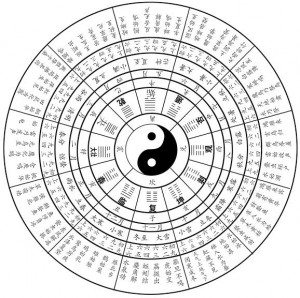
Having spent most of my formative years in Hong Kong and growing up in a Chinese family, we celebrated each Lunar New Year with passion. But despite going through these festivities year after year, I still had so much confusion surrounding the various calendars and dates that our celebrations the confusion of these varying calendars and dates were not lost on me. Why didn’t the Lunar New Year (Chinese New Year in my case) start on the same day year after year? Why do the years have different lengths? Why do I have to be a rabbit?
As I grew older and my resentment for math subsided, I found the answers to my questions when looking into the history of these calendars. It all boils down to ancient astrological traditions and mathematics from Chinese history. Over 2000 years ago, the start of the year was calculated to be the second new moon after the winter solstice. The ancients also knew that it took approximately 29.5 days for a full lunar revolution or “month” (in many Asian cultures, a month is also known as a “moon”), meaning that 12 lunar revolutions would total 354 days. This was relatively close to the time needed for the earth to make one trip around the sun, but it was shy of the traditional Gregorian 365 days. This small difference was enough to make the old lunar calendar impractical for foretelling seasonal changes.
In order to fix these imbalances, half of the months were made to have 29 days, and the other half to have 30, which resolved the additional half a day for every month. But to fix the issue of seasonal change preventing the New Year falling on different seasons each year, a 19-year system was put into place in which 12 of these years would be comprised of 12 months but 7 of these years would contain 13 months!
These ancients formulated these systems to measure time and we are still depending on them today, often taking them for granted. I hope I can at least appreciate and be thankful for what our ancestors have done, even if I’m unable to understand it completely. Which is why this time next year, when the new moon is upon us, I will do the right thing and ask my parents when Chinese New Year is – as usual.